
Cheti Chand
Sindhi New Year
Cheti Chand: Sindhi New Year
By Sikiladi
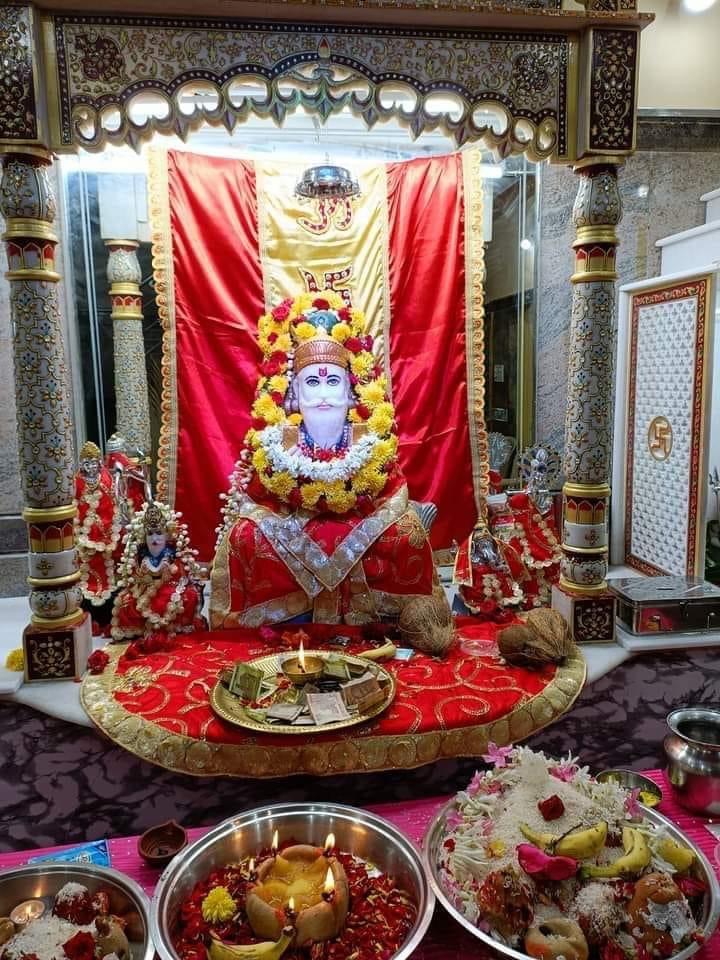
Cheti Chand also known as Sindhiyat Day is celebrated on the first day of the Chaitra Shukla Paksh of the Sindhi month ‘Chet’. The day is marked as the birth anniversary of the Sindhi deity ‘Jhulelal Sahib’ who is known as’ Varun Devta’ (Water God) by Hindus commonly. This auspicious day symbolizing the New Year of Hindu Sindhi community worldwide observed with huge fanfare coincides with Gudi Parva, Ugadi, and Vishu as per the Vikram Samvat calendar.
Cheti Chand holds extreme significance for the Hindu Sindhis as it is the day of emergence of Varun Devta as their patron Saint ‘Uderolal’ commonly called Jhulelal Sahib. Sindhis worship Uderolal as their savior saint who came into the human manifested form to protect them from the tyranny of the ruler of Sindh Mirkh Shah in 1007A.D. Born on the banks of River Sindhu, Uderolal’s birth was announced by a Divine Voice in the air (Akashvani) as a fruit of the forty days of fasting by the traumatized Sindhis.
Several rituals are performed in observance of the day marked as Cheti Chand:
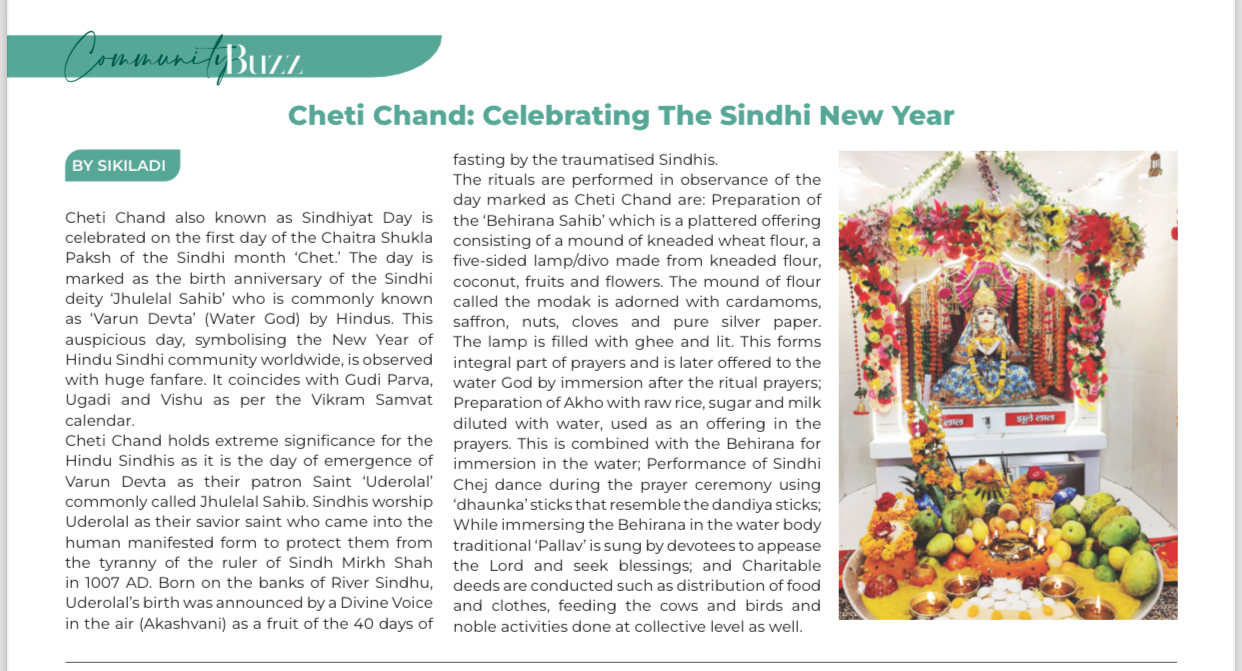
- Preparation of the ‘Behirana Sahib’ which is a plattered offering consisting of a mound of kneaded wheat flour, a five sided lamp/divo made from kneaded flour, coconut, fruits and flowers. The mound of flour called the modak is adorned with cardamoms, saffron, nuts, cloves and pure silver paper. The lamp is filled with ghee and lit. This forms integral part of prayers and is later offered to the water God by immersion after the ritual prayers.
- Akho is prepared with raw rice, sugar and milk diluted with water, used as an offering in the prayers. This is combined with the Behirana for immersion in the water.
- Sindhi Chej dance is performed during prayer ceremony using ‘dhaunka’ sticks that resemble the dandiya sticks.
- While immersing the Behirana in the water body traditional ‘Pallav’ is sung by devotees to appease the Lord and seek blessings.
- Charitable deeds are conducted such as distribution of food and clothes, feeding the cows and birds and noble activities done at collective level as well.

 Sikiladi